| Current
State of Research on the IL-2 [2025] Part 2: Wings |
Without
any doubt, it is the most asked question both on this site, and in my
personal e-mail: "Where-- and when-- are the Il-2 In Profile & Scale
volumes? Surely they must be done soon, yes?" Alas, no. I am sad to
clarify that there will never be a P&S title on the beloved
Il-2.
Advancing years and poor health have made that task impossible for me
to fulfil. The great understanding of this programme to the level
required will have to fall to someone else. In fact, the story is so
complicated, and the scale of knowledge so immense, I rather suspect
that this will have to be the single magnum opus of some dedicated
research talent, as yet unknown. It will always be a personal regret of
mine that over these long years I just could not find the
required
time nor opportunity to master this topic; there was inevitably some
other mystery
that needed solving.
In Part 2 of this review of
current research, we will take a technical look at the WINGS of the
IL-2.What new things are known, and how does the author interpret these
matters in light of the current work on this wonderful topic?...
=============================================
Il-2 Wings
Many,
many details about the various versions of the Il-2's wings need still
to be described and discovered. That much is absolutely clear. However,
armed with the latest research and photographs, what can we say now
about these items in the Il-2's history?
Not Evolutionary
For as long as the author can remember, we have been assured that the
development of the Il-2 structure was a linear affair: first,
all-metal airframes, then wooden fuselages, then wooden outer wings.
Perhaps there were some late metal outer wings, at least on military
models (certainly on the UIl-2 trainers). Well... no. These
notions are absolutely wrong. In fact, the manufacture of Il-2 wings was very localised affair vis a vis
the respective factory making them. That is, not only (albeit
primarily) the outer wings, but the inner sections as well, to a
degree.
There is as yet no evidence that any factory built wings of a
fundamentally different shape, plan-form, size, rib structure, aileron
area or any other basic parameter. This is true despite the on-going
debate surrounding the alleged "lobed aileron" wings on some early
machines (again, no compelling evidence so far). The difference in wing
construction was a matter of materials and detail finishing. And, of
course, this state of affairs-- to any experienced researcher on the
matter of aviation production-- should be both expected and normal. On
which programs have we ever seen such differences not
appear during manufacture at different facilities? The author can think
of no such case, and such detail differences are inevitable.
As regards to the idea that outer wings switched to wooden
construction "sometime during 1942", this is just not the case. Factory
No.18, originally in Voronezh and then evacuated to Kuibishev, was the
home of the Ilyushin Design Bureau (OKB), and thus the nucleus of Il-2
development. Wooden rear fuselages had already been designed by the
Ilyushin Bureau, and while early examples did suffer from some teething
troubles, these units were built in series at all factories and in
general were successful and cost effective. The OKB next designed
wooden outer wings to replace the original metal construction units.
This development followed the same eventual pattern in the Il-4
programme (also built in the same huge Factory 18 complex) where wooden
outer wings were built successfully and in series, showing good quality
and finish, but were greatly disliked and rejected by other factories
(in this case Factory No.126) who continued to built metal units. Very
much the same thing happened with the Il-2.
Under considerable duress, Factory No.1-- now also evacuated to
Kuibishev-- built wooden wings in series. At exactly what date this
started, and whether these were built exclusively or alongside metal
wings, is simply not now known. What is known is that this facility
used its own design for the wing skinning, and that the Government
didn't like it. Here we have two factories in the same city, but even
then co-ordinating production details was not possible. Factory No.1's
wooden wings were conspicuous and, one must say, not entirely
successful, and at some point all
production here returned to metal outer wings. When exactly this
occurred is again not known, but the author has not been able to find
any NII VVS review of a Factory No.1 Il-2 with wooden wings after the
start of 1944.
Factory No.30, on the other hand, made their opposition to wooden wings clear from the outset. At times, this facility refused outright
to manufacture any. The Government (NKAP), likewise, pathologically
criticised the factory for failing to do so, and these admonishments
continued during the entire war. It is true that some specimens were
made for evaluation at the NII VVS with wooden wings (p/n 301659, for
example), but every unit record entry (found so far) describing Factory
No.30 Il-2s mentions metal wings. If there were no conspicuous examples
of these, and noting that the NKAP never let up with their
complaints, one is left to ask whether Factory No.30 ever did build any
wooden wings, serially?
These observations lead one to another fascinating realisation: the majority of wartime Il-2 outer wings were of metal construction.
Metal, not wood. Since Factory No.30 built 8865 machines (and very few,
if any, were wooden), and Factory No.1 built 11920 examples (and
favoured metal over wooden), simple mathematics requires that this was
the case. Not at all the perception held over all these years. Somewhat
the same pattern was seen as regards to the implementation of swept
outer wings (the so-called 'arrow'), these being standard at Factory
No.18 from the start of 1944, with Factory No.1 lagging behind by
several months and Factory No.30 by more than that.
Swept Wings and Swept Wings
A great deal of interesting discussion has followed the publication of
Part I of this article, and also that on the identification of Il-2
wing types [see here]. After some reflection, the author is still
unnerved by what seems to be a commonplace difficulty in distinguishing
between 'arrow' and original wings, however wonders if the problem is
actually that observers are confused by straight wings?
"Straight" wings is, perhaps, a rather poor moniker. As a matter of
fact, all wartime Il-2s had swept aft outer wings-- all of them. The
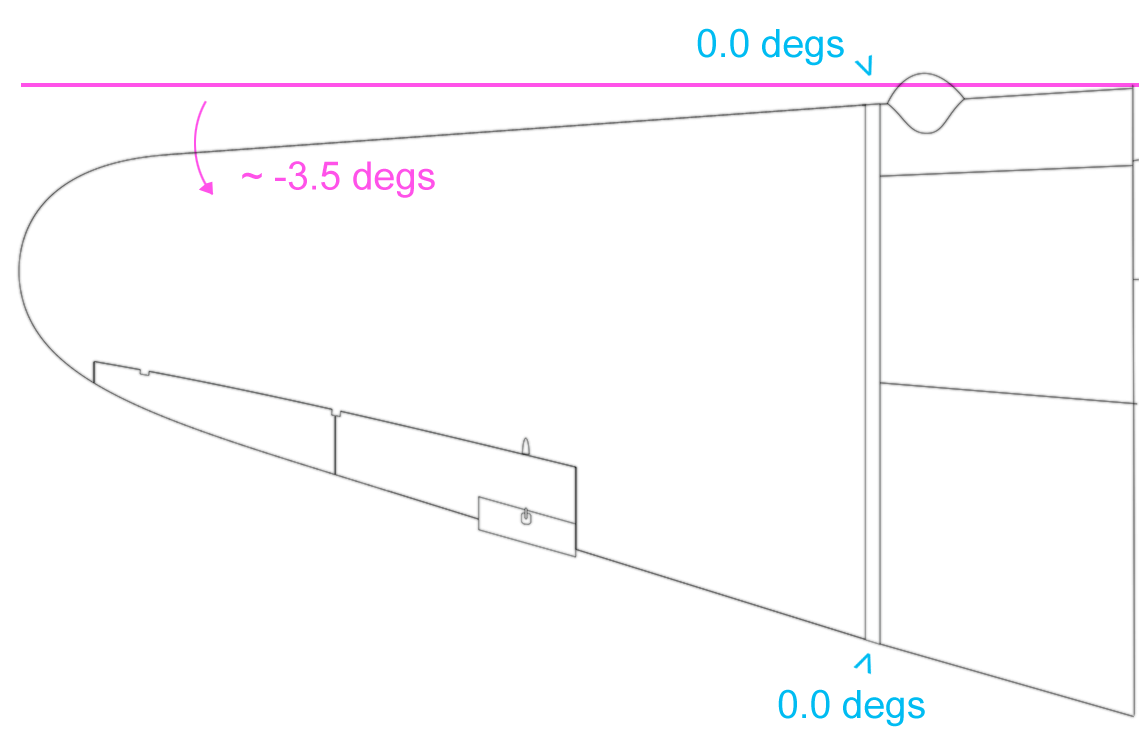
question is, by how much? The
original TsKB-55 had wings with a straight edge, inner to outer
sections (so that there was no 'kink' or deviation at the joint strap).
The leading edge (LE) was not, however, perpendicular to the fuselage
centre-line, but rather tapered aft by -3.5 degrees (or thereabouts).
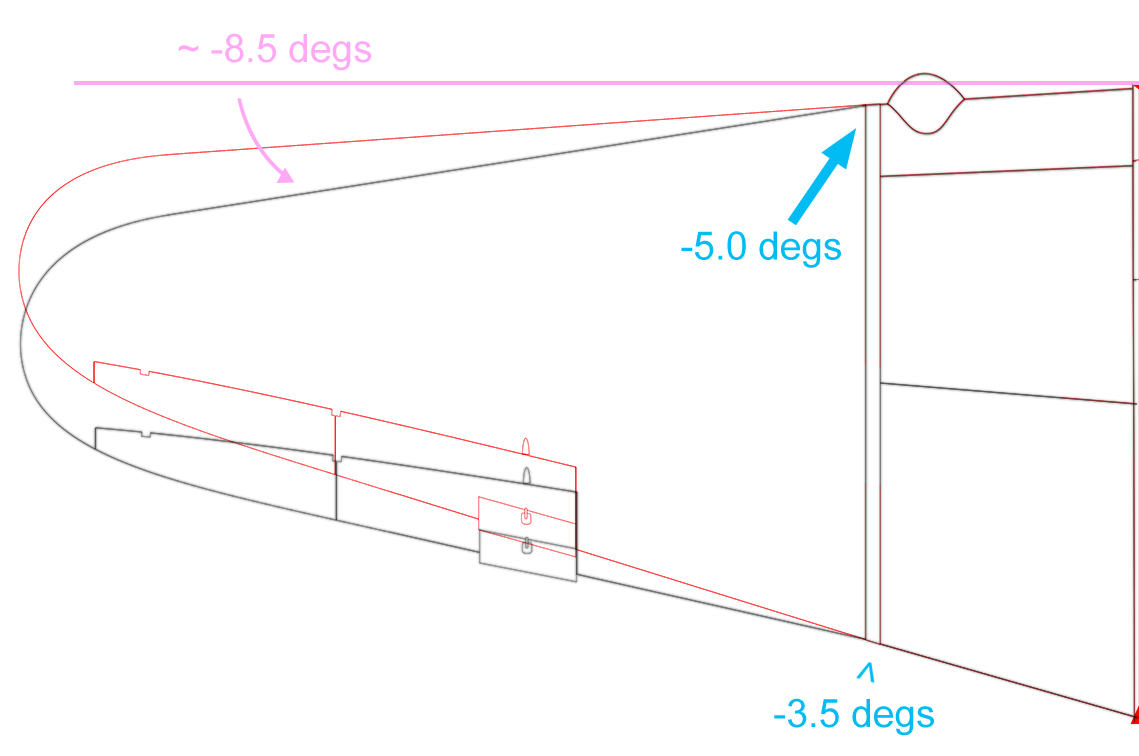
In the TsKB-57 the crew was reduced to a single pilot, and the outer
wings swept aft by 5 degrees (mainly for c.g. purposes). Very well,
"swept aft 5 degrees", but five degrees from where? In fact, the outer wing was swept aft from the joint strap, so that the entire outer section
was skewed aft. Thus, the outer section LE now had an absolute sweep of approximately
-8.5 degrees total, -5 degrees at the LE joint strap and -3.5
degrees at the aft joint. These joint strap angles are confirmed by the
1942 Remont, where they are given specifically.
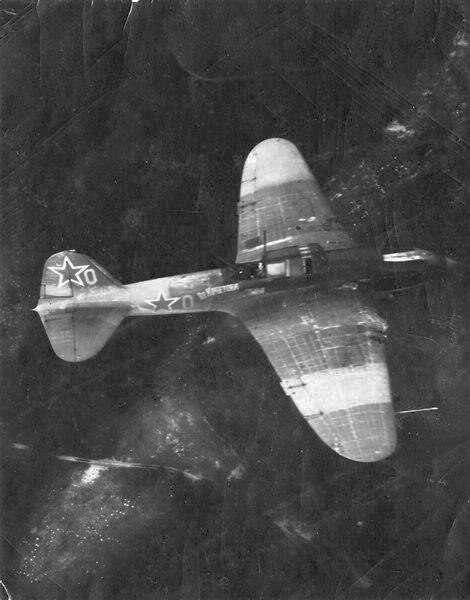
The position and spacing of the ribs was unchanged, and so too (thus)
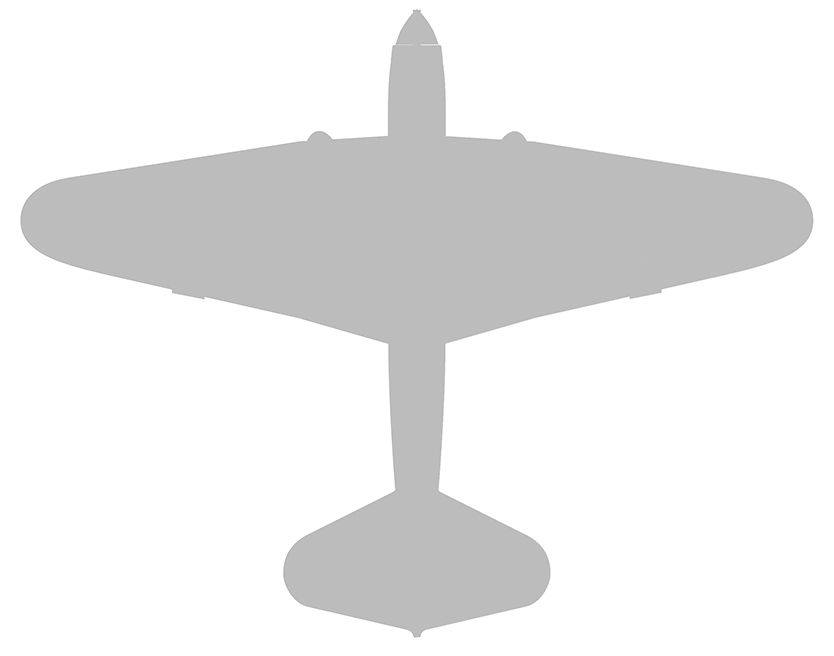
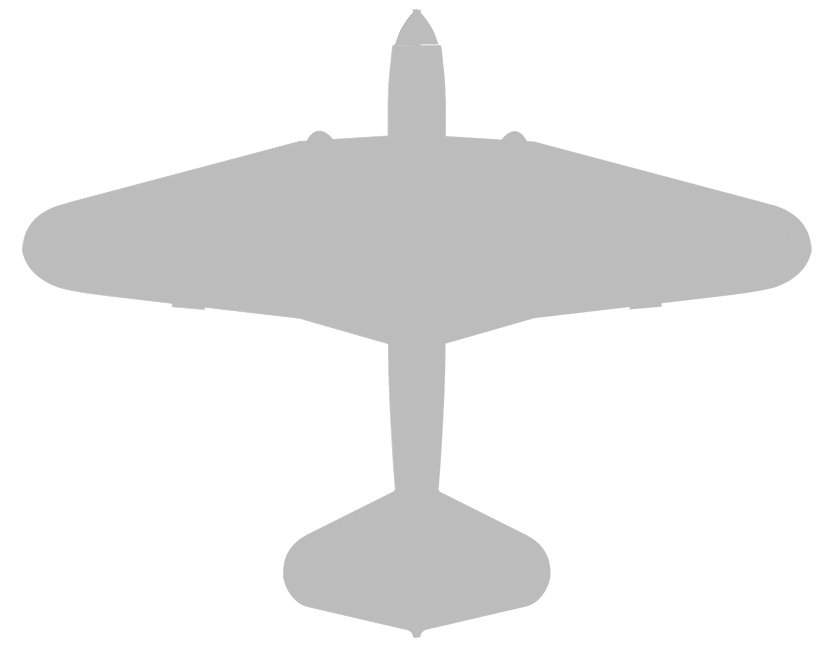
the size and location of the ailerons. As a result, the Straight Wing
Il-2 had a rather 'bat' shaped wing profile, as can be seen in this
lovely overhead image.
Comparing the resulting Straight Wing silhouette one can see that it is not that
dramatically different to the later 'arrow' profile. Seen from various
angles, one may understand that there could well be room for confusion
in cases when trying to identify the wing type, and in every case
careful attention is needed.
And The Arrow?
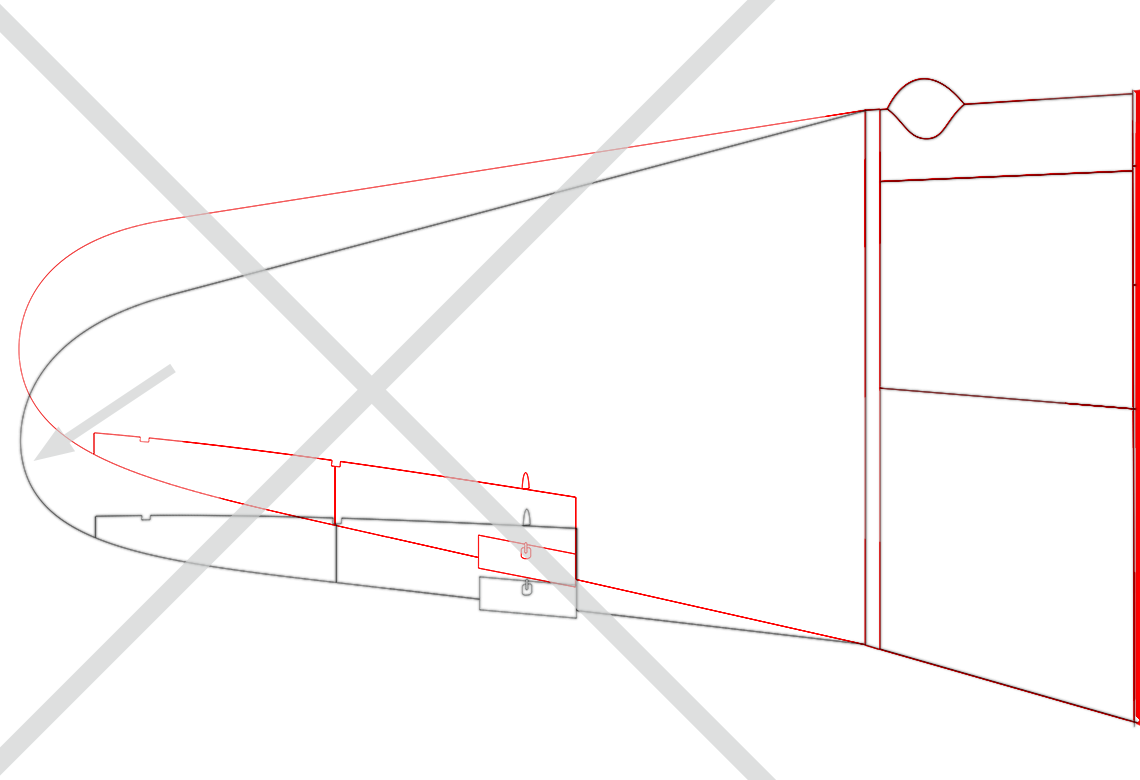
Speaking of 'arrow' wings, how did these come about? We have all read
that they were swept aft by -15 degrees, but again, how exactly-- from
where? As before, the outer wing was skewed aft (not 'rotated'), but
this to an absolute LE taper
of -15 degrees. That is to say, the LE angle at the joint strap would
have been about -11.5 degrees (*alas, this value is not given
specifically anywhere the author has seen, but it must be so in any
case). However, the span with the wings swept aft was reduced a bit to
14.52 m. This fact requires that the wing tip was modified slightly,
else the new -15 degree plan-form would have added a meaningful amount
of area to the wing, adversely affecting performance [recall that the
'arrow' wing came about as a result of an "improved aerodynamics"
effort, and this is indeed how the OKB referred to this model].
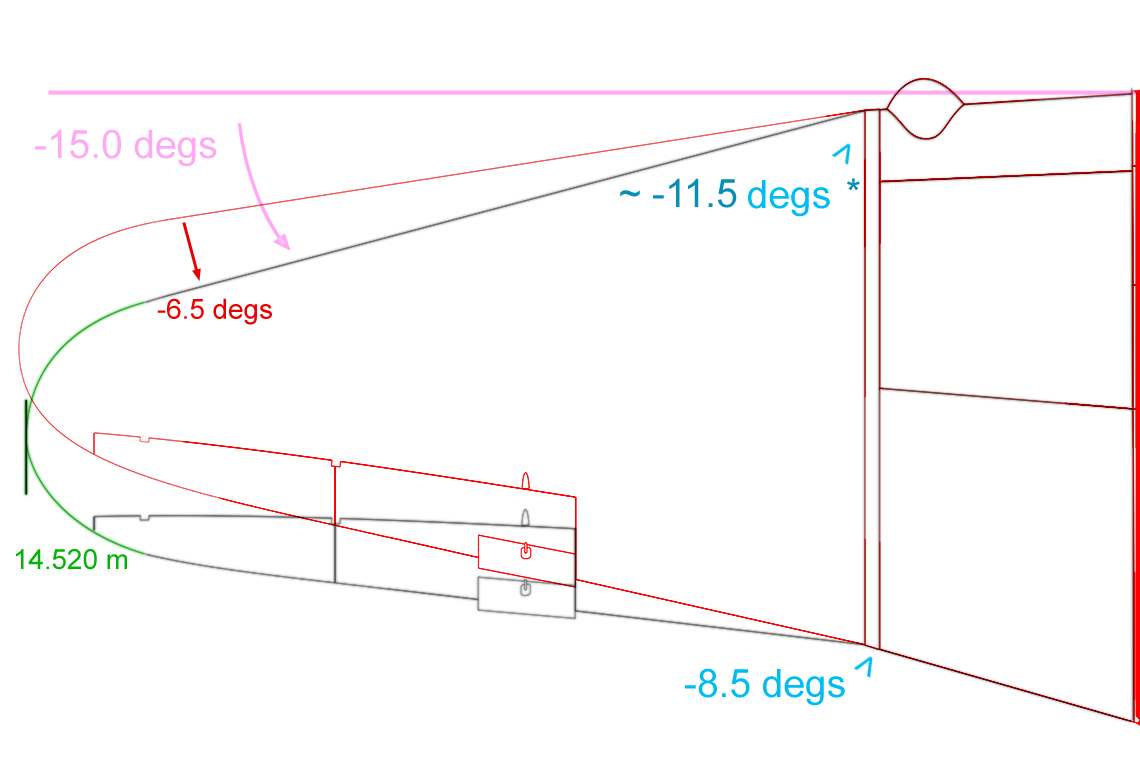
Thus, the ultimate difference in wing sweep between a Straight Wing
Il-2 and an Arrow Il-2 is a paltry 6.5 degrees. Not even double the
amount; certainly not as much as one would be led to believe.
Lastly, Metal?
Traditionally, the author has been somewhat sceptical about the
appearance of metal arrow wings during the GPW. However, growing
evidence to the contrary is eating away at this premise. It now seems
likely that Factory No.30 never built any
wooden wings at all, and hence their arrows must therefore have been
metal. We know that most of these were delivered during the war, as
production of the type there ceased in June 1945. Indeed, p/n 308331 is
lovingly preserved in Belgrade, a fine example of just such a machine.
Our old friend at Kbely (p/n 12438) has metal arrow wings,
and even though these were certainly not original to the airframe as built, it probably
finished the war wearing them. The 1945 Remont
seems to suggest that at
Factory No.18 not only did all of the UIl-2s have metal arrow
wings, but perhaps by then the normal attack versions, as well. Another
fascinating observation is that metal arrow wings from at least
Factories No 1 and 30 appear to be 'universal', or in other words could
be used for either training machines or armed versions by the use of
some simple cover pieces.
The veritable mountain of accompanying details about outer wings--
ailerons, nav lights, pitots, rods and actuators, panels and
who-knows-what else will have to wait for later discussion. Next up
will be an article on Il-2 fuselages. Prepare for confusion...
---------------------------
