Current State of Research on the IL-2 [2025]


Without any doubt, it is the most asked question both on this site, and in my personal e-mail: "Where-- and when-- are the Il-2 In Profile & Scale volumes? Surely they must be done soon, yes?" Alas, no. I am sad to clarify that there will never be a P&S title on the beloved Il-2. Advancing years and poor health have made that task impossible for me to fulfil. The great understanding of this programme to the level required will have to fall to someone else. In fact, the story is so complicated, and the scale of knowledge so immense, I rather suspect that this will have to be the single magnum opus of some dedicated research talent, as yet unknown. It will always be a personal regret of mine that over these long years I just could not find the required time nor opportunity to master this topic; there was inevitably some other mystery that needed solving.

However, I do not want, either, to simply abandon the subject entirely. That would be a disservice to this wonderful aeroplane and the brave men and women who designed, built and flew her. Therefore, perhaps here we can discuss what IS known (and ISN'T), and even chart a way forward that the research still required must go, generally speaking. Much on this topic has been written, and learned, and maybe-- just maybe-- the time is at hand to complete the job...

=============================================

Basic Research Tools

The basis for all research work on the Il-2 will be the acquisition of as many copies of the Teknicheskoe Opisane (Technical Manual) as possible. Material has been posted on-line from the 1941 version and the 1944 T.O. from Factory No 18. These documents must exist somewhere, thus, likely in some personal collection(s). One can hope that these have been made publicly available for research, rather than being hoarded and monetised as is the more usual current day behaviour. The most important T.O.s, however, will be from the years 1942 and 1943, and the author thinks that it is very likely that more than one T.O. was issued during each of these two years. Indeed, it is virtually certain that a late 43 or early 44 T.O. must have been completed for Factory No 30 in Moscow, as the Factory No 18 version does not cover straight metal wings. The 1944 Spravochik (a sort-of parts catalogue type manual) also suggests the same (and shows these very wings), and lists additionally 22 Technical Update Bulletins related to the Il-2, two different Remonts (Repair Manuals), two Technical Guides and other related government documentation. Lastly, it mentions a specific manual related to construction of the canopy and cockpit covers. Very much needed!

To this trove of technical data we will need to marry a chronological understanding of production at the four main Il-2 programme factories: 1, 18, 30, 381. As well, a comprehensive design story-line will be required from the Ilyushin OKB. An impressive amount of this kind of material has been published by the heavyweights of the Modelist Konstruktor fraternity (Kotel'nikov, Rastrenin, etc), and adding to this material would be ideal, if it is possible. As for the technicalities of the machine, itself, the tried-and-tested method of painstakingly examining of the material from the NII VVS' test regime will be crucial. These reports virtually always include photographs, and always a nearly pedantic level of detail about the test subject. Married to an understanding of what the
Government (NKAP) thought of these tests, as well as the how much of this material reached the OKB (and in what form: as an order, a suggestion, an observation?), one will hope to be able to work out what was done in production, and when (e.g. at which Series).

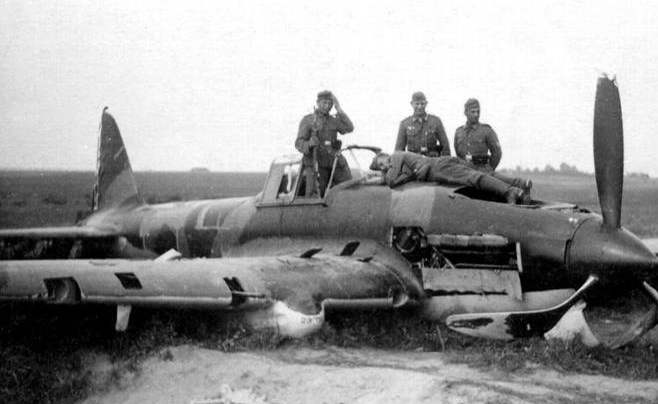
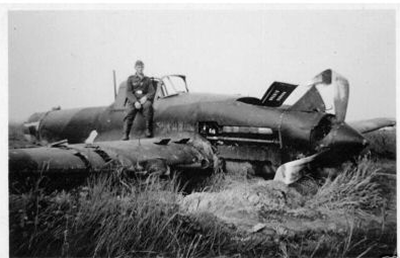
Lastly, all of the documentary evidence in the world is never enough. It always happens that some discoveries can only be made with the examination of archaeological artefacts. Always. Said researcher will need to examine as many surviving recoveries as possible, both to detail them but also to measure them in great detail. This kind of work is tedious, difficult and expensive, but it simply must be done. There are no short-cuts.

Current Points of Debate

To illustrate the sheer scale of the problems currently being addressed in research about the Il-2, perhaps it would be helpful to mention some of the main topics of debate. However much one might think that they have a grasp of this programme, this exercise should show them that there is more they do not know rather than what they believe to have in hand! These questions are quite fundamental in nature, and as yet no one can answer them.

Wing Tips

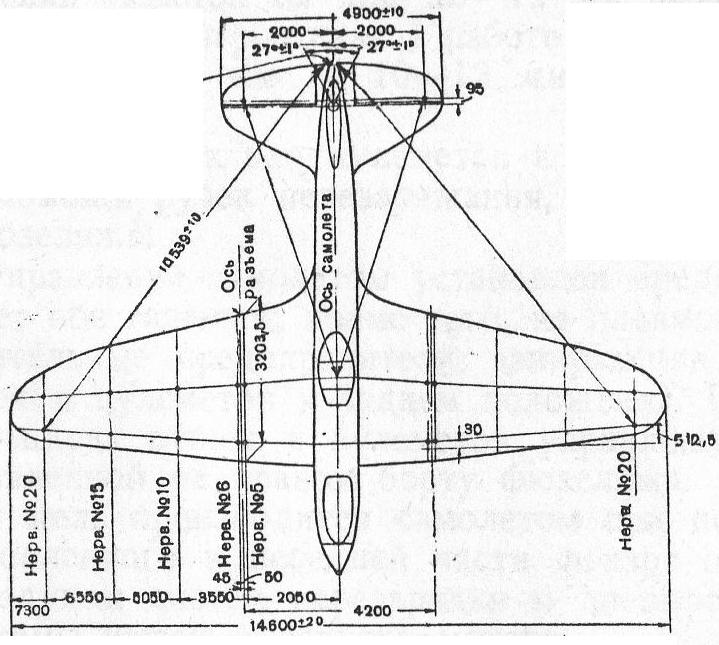
The internal structure of the Il-2's wings is well known. Diagrams from the T.O. and other sources show that the ribs and spars of straight wings made of wood and duralumin are identical, for example. But, the 1941 diagram shows a curious wing tip shape with 'lobed' ailerons, one not seen again. Is this a drawing an aberration?

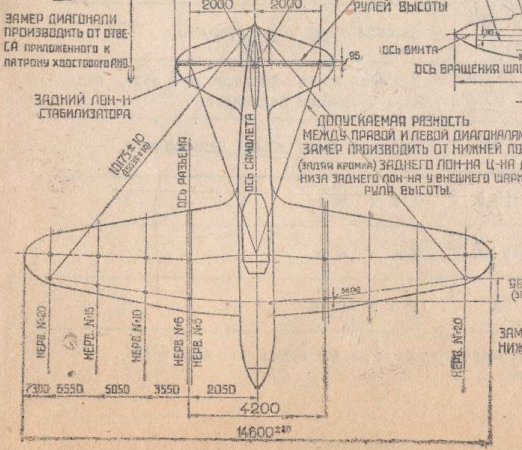
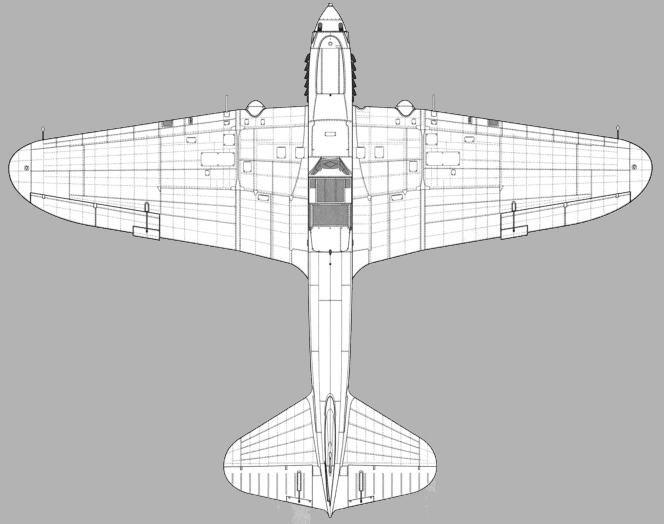
Wing structure (and other) tolerance dimmentions from the 1941 T.O. Wing structure (and other) tolerance dimmentions from the 1944 Spravochik showing the straight metal wing Early Il-2 frrom Factory No 381 as drawn by A. Jorgenson, published in Avialollektsiya 2015 #3.

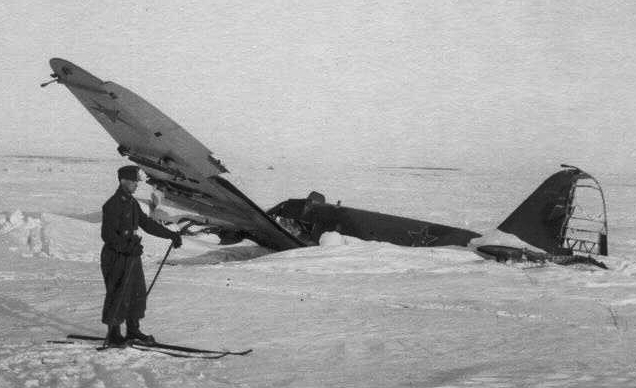
There are a number of very good photographs showing the entire wing of early model all-metal Il-2s. These images show a rounded wing tip of the type usually seen on Il-2s of many examples, suggesting that this was the normal shape. However, these images are usually taken of machines built in Kuibyshev, either at Factory No 18 or No 1. Could the 1941 T.O. have been based upon an Il-2 manufactured in Leningrad at Factory No 381? Could it be that the wing-tip was re-designed with the installation of the VYa-23 gun at all factories? The author has never seen the 1941 T.O., and thus if this contains information that guided Mr. Jurgenson's he work cannot be aware of it.

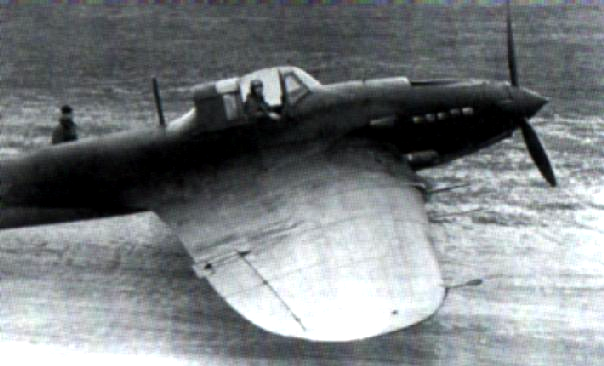
An early metal-winged single-seater from Factory No 18, even sporting an external aileron balamce, albeit armed with the 23 mm gun Some observers have pointed to this image. Does it show a 'lobed' aileron, or is it just sitting at a curious angle? This does appear to be a ShVAK armed example

Wing Construction

The original Il-2 wing was made of duralumin with metal covered ailerons. The assumption has always been that when the outer wing changed to wooden construction that the ailerons were then fabric covered. But is this actually true? There are photographs showing what surely look like metal covered ailerons on wooden wings. Were these a replacement, or from the factory? And if so, from which?

Factory No 30 did not like wooden wings at all, and suggested to the NKAP that they should build metal wings only, and until then they would do mixed construction wings (metal structure with wood skinning). Did this in fact happen? There is some documentary evidence suggesting that it did.

Factory No 1 had their own method for wooden wing skinning, and while it was accepted to be structurally sound, the NII VVS condemned the surface finish and resulting performance penalty. Later tests of Factory No 1 examples do not show this problem, so was the method changed or did the factory revert to metal wings?

The same factory was reluctant to built 'arrow' wings (possibly for this very reason); did they ever in fact complete any? If so, at which Series? UIl-2s from 1945 are known with all-metal 'arrow' wings, but what about the normal attack Il-2? The 1944 T.O. does not mention such wings, so these would have to have been very late in the war (after autumn '44, at least). These questions are very much related to the Kbely Il-2 p/n 12438, which features metal 'arrow' wings with very curious details on them.  A Series 38 Il-2 from Factory No 1 could not have been built with metal arrow wings-- this would have been nearly two years too early. So, where are these units from? Do any factory or production numbers remain on the interior structure?

Were outer wing sections interchangeable? Anecdotal testimony claims in many cases that machines at the front flew with different outer wings-- one side wooden and the other metal. Is such a thing even technically possible? Could a machine be re-fitted with any wing types, regardless of how it was built (e.g. did this happen to 12438)?

Pilots believed that metal wings were superior to wooden units with regards to survivability with combat damage. Testing at NIPAV and VIAM did not substantiate these views. Was this just the usual wartime scuttlebutt, or did the testing not reflect the actual situation in the field?

Windscreens

At least three versions of Il-2 windscreens are recognised by the author, and generally debated. Were these different per factory? By date? A combination of these things?

Rear Cockpit Covers

A torturous topic resulting in insomnia and despair! Given the material already known (and with the firm assumption that more will be found), exactly how many types of aft cockpits were there? From the factories this could easily number five, six, seven or even more, and let alone how many field types of modifications there were. During 1942 it seems impossible that the NII VVS and TsIAM completed any other work whatever except for the evaluations of Il-2 gunner's compartments and gun mounting options! Moreover, how do these options fit within the production history of the Il-2? Who built which ones, and when?

A small victory in this matter was recently recorded by the author. No
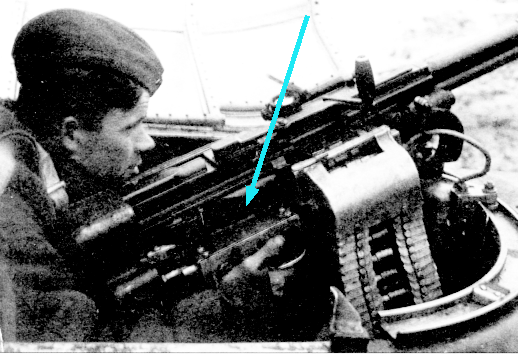
Teknicheskoe Opisane or other technical documentation regrading the 12.7 mm Berezin UBT gun shows the pistol grip as seen on many Shturmovik photos. How can this be!? It was realised at last that this unit was not a part of the gun; indeed, looking at good close-up images one can see that it is bolted onto the bottom and right side of the weapon. This assembly was part of the VUB-3 mount.

In this view one can see that the pistol grip assembly was attached to the UBT gun, not an integral part of it The VUB-3 mount seen with the Berezin gun removed

Wing Access Hatches

Perhaps the most frustrating of all l-2 mysteries, the number and placement of the various access hatches and doors on various Il-2 wings is a bewildering mass of contradiction. Indeed, at times it seems as if each wing had the access hatches installed individually! But, as a matter of fact, that might not be entirely wrong.

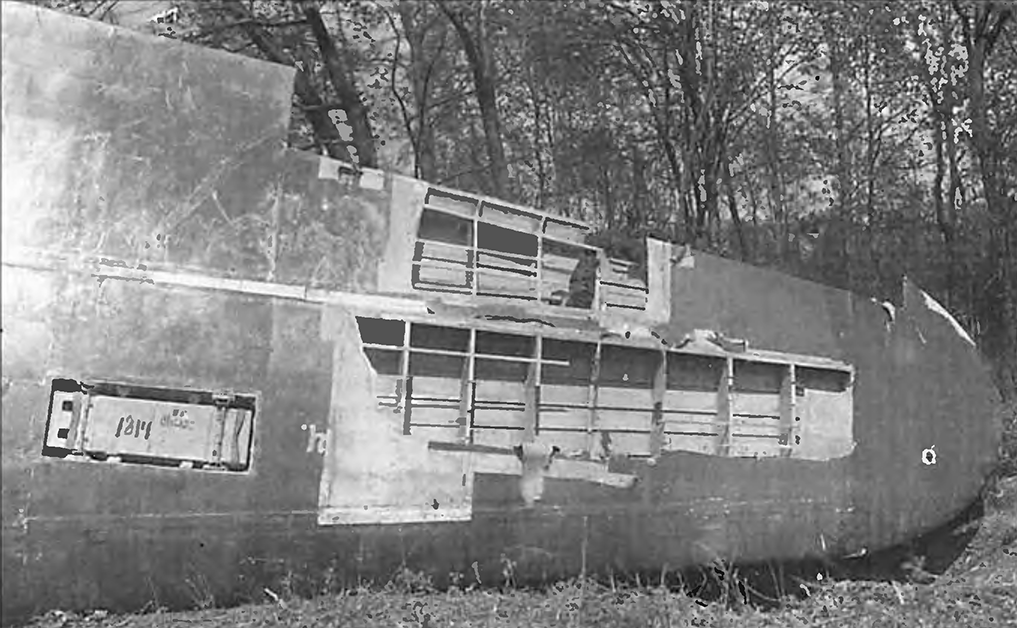
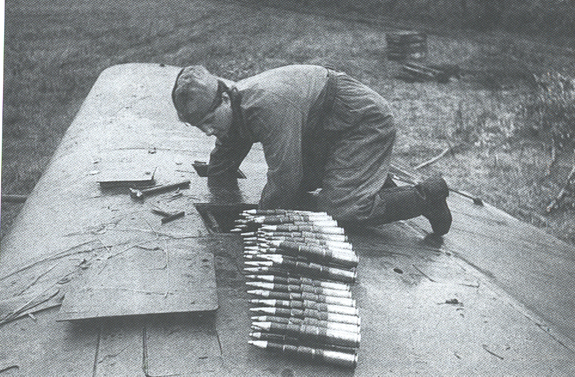
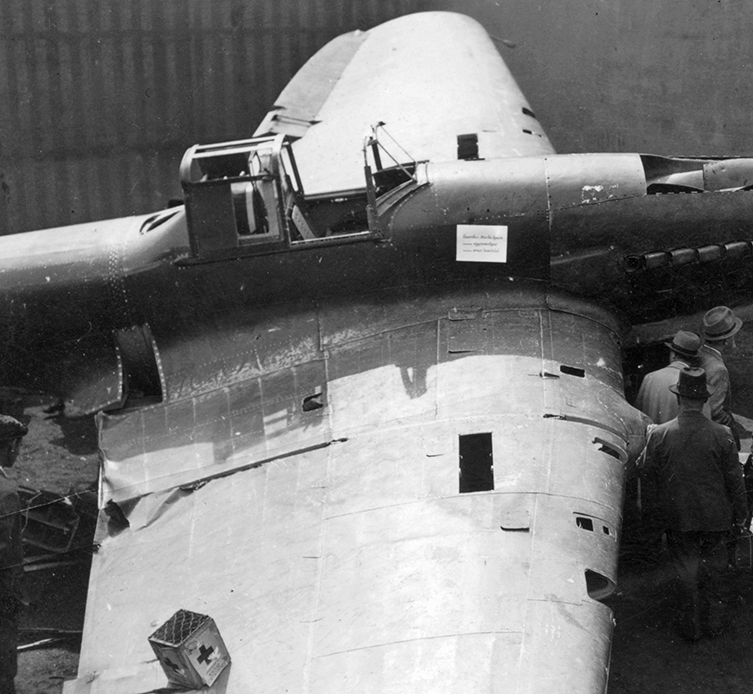
We have a wonderful image of the straight wooden outer wing section of some machine, the photo dated April 1943 [see below]. This unit features the Factory No 1 skinning method (sheets attached to the spar edges, resulting in a prominent seam), and if the ammunition box is to be believed (and is not a replacement), this should be p/n 11814, a nice Series 14 two-seat model Il-2 from Factory No 1. All of these details agree very well.


One can see virtually the entire outer wing-- albeit a small portion inboard is not in view-- and literally the only visible hatch is a single cover for the 23 mm cannon ammo box. Nothing else. The author is reminded here of the crew entry doors of the de Havilland Mosquito, which were individually cut out of the fuselage. None were thus interchangable. This rectangular hole is a bit 'wonky', as well; is it possible that it, too, was cut out of the completed wing, meaning that no two examples would be strictly identical?

Compare this unit to these wooden staight outer wings:

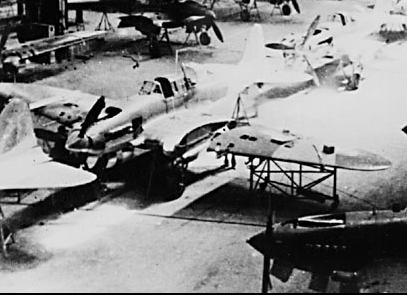
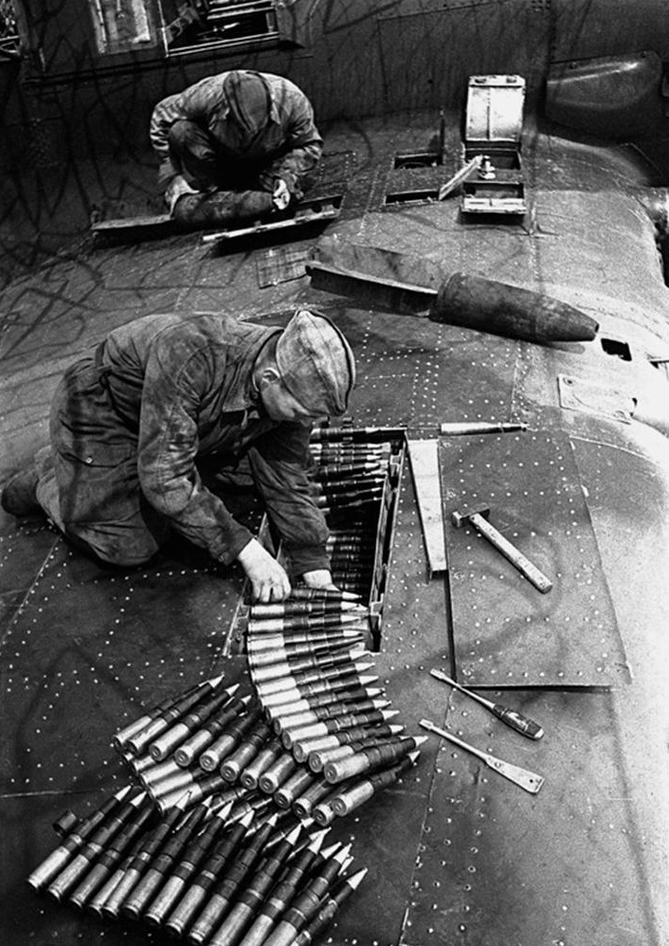
Il-2 two-seat straight wooden wing examples being built at Factory No 18, 1943. A number of access doors are visible, and none of these agree with the above wing from Factory No 1 Another wooden wing, quite possibly from Factory No 18. The door pattern is similar to the examples left, but would one say 'identical'?

And what about the metal straight wing outer section? Here there is less evidence, but what does exist suggests that the matter is just as contradictory as with the wooden models.

But, what of the inner wing? These were built integral with the central fuselage, so surely they would not require any serious moification and should be identical. No..? No. That is certainly not what the photographic record reveals.

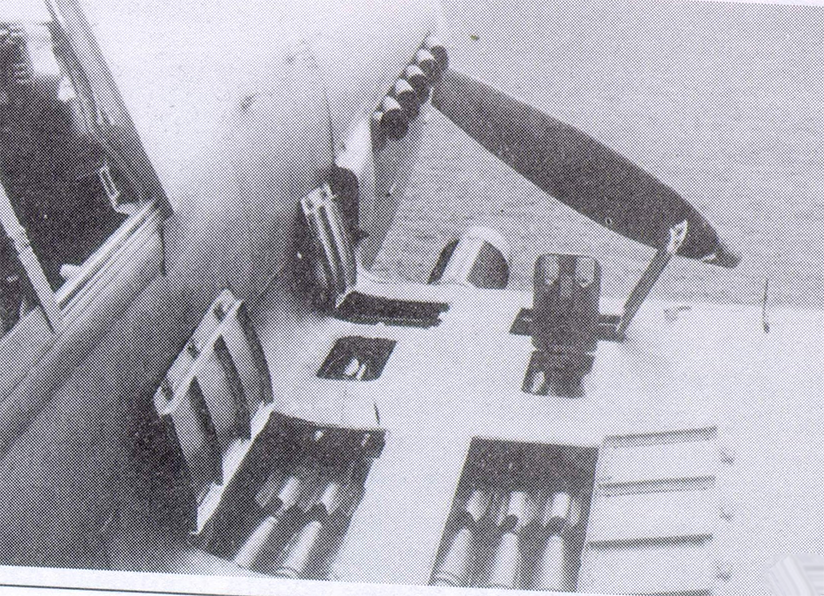
A fine close-up of the hatches on an early model single-seater. The main bomb compartment doors open to the side, opposite each other Another early all-metal Il-2. The wing hatches are similar to the machine left, but slightly different in size and shape, and with fewer stiffening ribs On this example the main bomb doors open forward. Note the different placement and number of hatches as compared to the previous machine

This looks to be the original Factory No 18 facility at Voronezh, summer 1941. It looks as if all of the main hatches open to the front, and that there are relatively fewer of them Another with forward opening hatches, bearing a strong resemblance to the early Voronezh example A very early ShVAK armed machine. Note the reduced number of hatches, their placement, and the absence of upper door covers over the main bays

Other Deatils
Can Anything Be Done Now?

These lists of unknowns could go on and on. One likely will get the idea that there is a lot to learn about the Il-2, or at least they should do. On the other hand, many also will point out that these matters are all quite pedantic, of the proverbial "rivet-counting" variety, and that many modellers, historians and artists do not subscribe to these ideas. From this point of view, our understanding of the Il-2 has advanced considerably, and many new images of the aircraft have appeared in the last 25 years.

Whichever of these views is "correct" is a matter of interpretation, and the reader will decide for themselves which it is. The author remains sceptical. IF it is really the case that our knowledge of the Il-2 has increased so much, why is there so little evidence of this fact in the public domain? The mis-use of non-existent types and nomenclatures relating to the Il-2 persists everywhere. The matter of Il-2 painting and colouration was solved decades ago-- as continually proved by the recovery of very many wrecks during the last 25 years-- and yet one sees scant evidence that this information has penetrated any mythical or populist sentiment anywhere. The interpretation of period photography remains catastrophically poor, in fact to the absolute shock of the author. How can we claim any advancement in our knowledge bearing all this in mind?

That all sounds a bit negative. Perhaps it is best to concentrate on the new photographic evidence which has been revealed during the last quarter century, and which is formidable. A celebration of these discoveries must be in order, surely. The author was pleased by the enthusiastic response to the inclusion of top side profiles in the I-153 P&S volume. Not easy to do, these, but very much worth the effort (those in the know are aware that the Chaika is a personal favourite, requiring such efforts). As a result, the idea is forming in the author's mind of a new book on the Il-2, not in the Profile & Scale series (this is impossible), but something based on images with profiles and interpretation. And why not upper surface profiles, as well? Perhaps the time has come to expand profiling in this direction, generally?

In any case, that is the state of play regarding the Il-2. One hopes that some as yet unheralded historian steps forward immediately to take this subject in hand and solve these many, many confusing technical matters. But, until then, perhaps some enthusiasm can be generated by the execution of some new, high quality artwork? Maybe, we will see....
---------------------------